
10mm vs 12mm Tile Trims: Which Size Do You Actually Need?
6th Jul 2025
10mm vs 12mm Tile Trims: How to Choose the Right Tile Edging
Choosing the correct tile trim thickness is essential for a professional, clean finish. The most commonly used sizes are 10mm and 12mm tile trims. While they may look similar, selecting the wrong trim can lead to uneven edges or weak finishes.
This guide will explain the differences between 10mm and 12mm tile edging, how to measure your tiles accurately, and which option is best for your project — whether it’s a small bathroom, kitchen, or high-traffic commercial floor.
What Is a Tile Trim?
Tile trims, also known as tile edging profiles, are protective strips installed along exposed tile edges. They prevent chipping, seal corners, and create smooth transitions. Tile trims come in various materials including aluminium, stainless steel, brass, and PVC, and in different depths to match your tile thickness. For vertical applications, explore our wall tile edging trims for a clean, professional finish, designed to create sharp lines and protect exposed edges.
Tile Trim Thickness: 10mm vs 12mm Explained
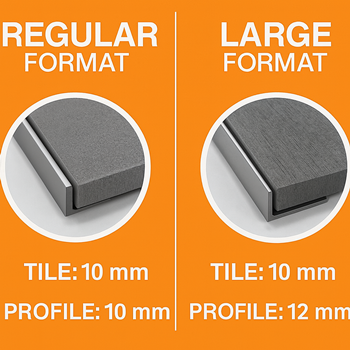
10mm Tile Trims
- Fits tiles up to 10mm thick, including most ceramic and standard porcelain tiles.
- Commonly used on walls, kitchens, and bathrooms with regular-sized tiles.
- Creates a subtle, minimalistic edge appearance.
12mm Tile Trims
- Designed for tiles up to 12mm thick, including natural stone, slate, or large-format porcelain.
- Offers stronger protection for heavy-duty or high-traffic areas.
- Ideal for projects requiring durable floor tile edging trims for high-traffic areas, such as commercial spaces and busy walkways.
How to Choose the Right Tile Trim Thickness
- Measure Tile Thickness Accurately: Use a caliper or measuring tape, including the adhesive layer.
- Consider Tile Type: Natural stone or extra-large porcelain often needs 12mm trims.
- Match the Look: 10mm provides a slim, subtle finish, while 12mm offers a more prominent profile.
- Location Matters: Floors and exterior corners benefit from thicker edge protection.
Pro tip: The trim depth should slightly exceed the tile plus adhesive to avoid overhang or recess. When unsure, choose a slightly larger trim for a flush finish.
Installation Tips for Tile Trims
- Test-fit trims before applying adhesive.
- Use a mitre saw or fine-tooth hacksaw for clean corner cuts.
- Ensure trims are level and flush with tile surfaces before setting.
Popular Tile Trim Materials (Available in 10mm & 12mm)
- Aluminium Trims – Lightweight, cost-effective, and easy to install.
- Stainless Steel Trims – Durable, corrosion-resistant, perfect for high-traffic areas.
- Brass Tile Trims – Elegant and long-lasting.
- Formable (PVC) Trims – Flexible, easy to cut, ideal for curves or unique shapes.
Where to Use Tile Trims
Tile trims are essential across different areas of the home. For moisture-prone environments, choosing the right bathroom tile trims for waterproof edge protection ensures long-lasting performance and resistance to humidity. In cooking spaces, consider specialised kitchen tile edging trims for splashbacks and worktops that can handle heat, spills, and frequent cleaning.
Why Choose National Tile Trims?
We stock a wide range of straight edge tile trims in both 10mm and 12mm sizes. Whether you’re finishing a small bathroom or protecting tiles in a busy commercial space, our trims provide a professional finish every time.
Learn more with our expert resources, such as The Ultimate Guide to Tile Trims, for deeper insights.
FAQs About Tile Trim Thickness
What size tile trim should I use?
Choose a trim that matches your tile thickness plus adhesive: generally 10mm for standard tiles and 12mm for thicker or large-format tiles.
Can I use 12mm trim for 10mm tiles?
Not recommended. The edge may be recessed or adhesive exposed. Always match trim size closely to tile depth.
What happens if I use the wrong trim size?
Too small and the tile won’t fit; too large and edges may look untidy or collect dirt. Accurate measuring ensures a flush, clean finish.
Is tile edging necessary?
Yes. Trims protect edges from chipping, water damage, and wear while enhancing the visual appeal of your tiling project.
Final Thoughts
Choosing the correct tile trim thickness—10mm for standard ceramic tiles or 12mm for thicker materials—ensures your tiling looks professional and lasts longer. Measure carefully and select the right material for your space.
Ready to find the perfect tile trim?
Browse our tile edging range or speak to our team for personalized advice.